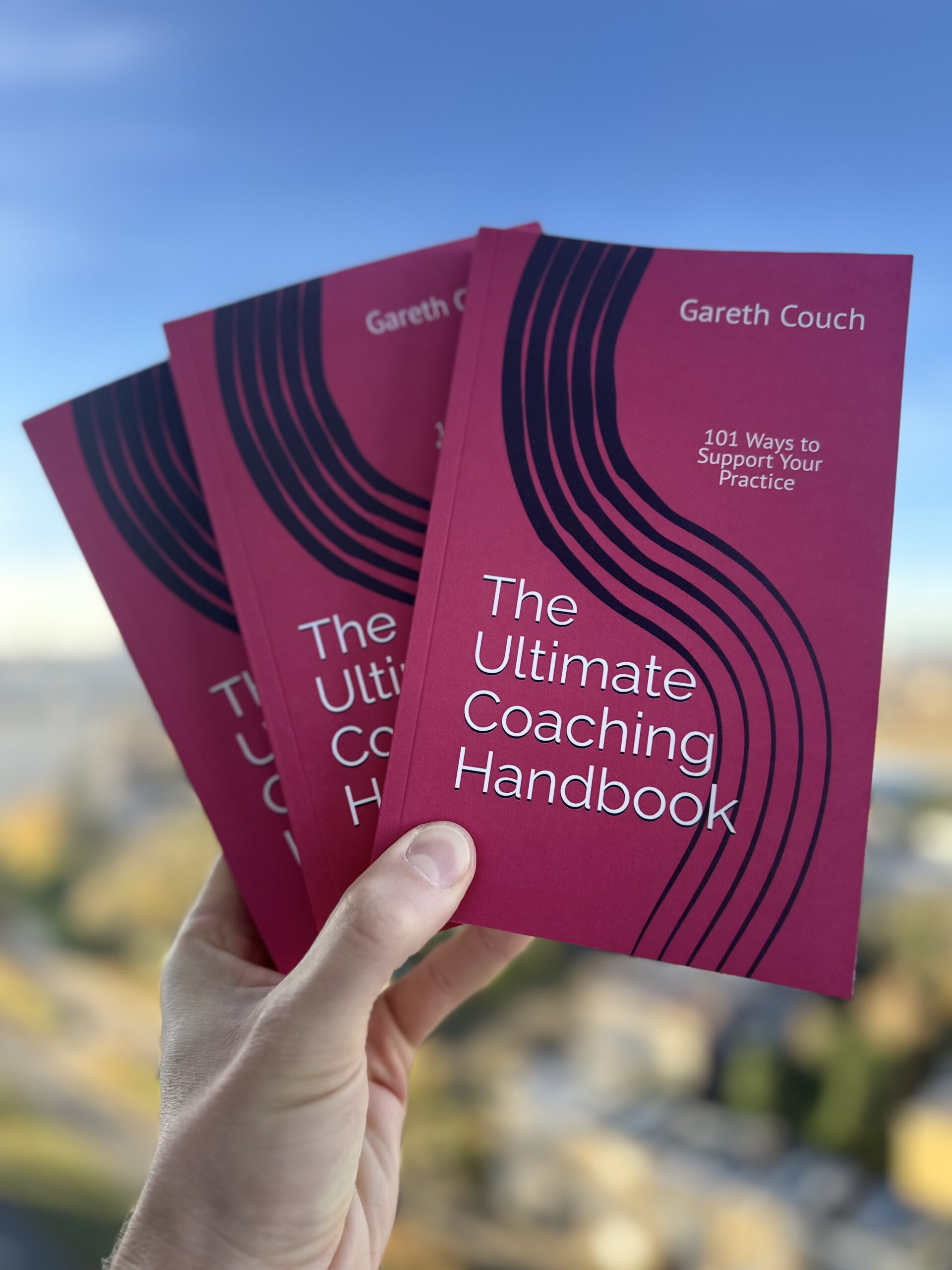
For more than sixteen years, I wanted to write a book. Sixteen years. I’m not entirely sure what qualifies something as a goal after that length of time because, at some point, presumably it stops being a goal and becomes part of the furniture: something you carry around with you, occasionally point at and say, yes, I’m going to do something about that, before getting on with whatever is apparently more urgent.
But I genuinely did want to write one. I had ideas — lots of them — and over the years I wrote things down, started things, abandoned them, imagined structures, changed my mind about structures and generally maintained a long and surprisingly committed relationship with the idea of writing a book without actually producing one. I think part of me was waiting for the moment when the right idea would arrive fully formed, accompanied perhaps by the necessary confidence, discipline and clarity to turn it into something real. Unsurprisingly, that moment never came.
And then, eventually, I wrote one.
The Ultimate Coaching Handbook: 101 Ways to Support Your Practice exists. There is something wonderfully strange about holding an object that previously existed only as a collection of thoughts in your head, particularly when those thoughts have been hanging around for the best part of two decades. What I find interesting now, though, is how little the process resembled the one I had imagined. I thought writing a book would begin when I finally knew exactly what I wanted to say. In reality, much of what I wanted to say became clearer because I started writing.
WAITING UNTIL I KNEW HOW
I had always imagined there would be more of a plan. Perhaps I’d map the entire thing out first, know exactly how the chapters connected and then settle into some impressively disciplined writing routine involving early mornings, good coffee and the sort of desk you see in interviews with proper authors. Instead, I had the idea of 101 relatively small pieces — observations, experiences, questions and things I’d learned through coaching and working with coaches — a rough sense of where I wanted to begin and where I hoped I might end up, and a considerable amount of material floating around in my head.
So I started putting some of it onto the page.
This was simultaneously very obvious and much harder than I’d expected. I’ve written for years: articles, training materials, social media posts, academic copy-editing and all sorts of other things. I like writing. I also know coaching pretty well. I had therefore made the slightly optimistic assumption that combining two things I was comfortable with would make writing a book relatively straightforward. It didn’t. Knowing something, talking about it and turning it into something coherent enough for somebody else to read are very different things.
The temptation was constantly to improve things before they properly existed. I’d write a paragraph and immediately start judging it, then start editing it, then wonder whether the whole idea was wrong, and suddenly twenty minutes had passed and I’d produced fourteen words. Eventually I had to become more tolerant of writing things that weren’t yet very good. Not because quality didn’t matter — it mattered enormously — but because there is very little you can do with the perfect paragraph that remains unwritten. A bad paragraph, at least, gives you something to argue with.
EACH OF US HAS SOMETHING UNIQUE TO OFFER
Around this time, I was doing a live coaching demonstration as part of International Coaching Week. It was my first live demo and I was nervous, curious and not entirely sure what to expect, which, looking back, was probably quite good preparation for the writing process itself. Coaching while other people observe you is a peculiar experience anyway; you’re trying to remain with the client while being acutely aware that a group of people is watching you attempt to remain with the client.
Something the client said during that conversation stayed with me:
Each of us has something unique to offer.
It landed rather more heavily than I expected. Not because I suddenly concluded that the world had been waiting impatiently for Gareth Couch to write a coaching book, but because it made me think differently about what gives any of us permission to contribute something.
I had spent years coaching, leading, training coaches, learning, getting things wrong, changing my mind and accumulating experiences that had shaped how I understood the work. I’d watched other coaches work and had other people watch me. I’d had conversations that changed how I coached and others that left me wondering what the hell I’d just done. I had learned from brilliant people, borrowed ideas, adapted them, rejected some of them and eventually developed my own way of thinking about the work.
None of that made me the definitive authority on coaching. It did, however, mean I had something to say.
That distinction became important.
WHO AM I TO WRITE THIS?
The doubt didn’t disappear once I started writing. If anything, putting things onto the page gave it considerably more material to work with. Who am I to write this? What if nobody cares? What if it’s not good enough? What if somebody who knows far more about this than I do reads it and thinks I’ve completely missed the point?
I’ve often described those thoughts as imposter feelings, although I’m becoming increasingly wary of giving every moment of professional uncertainty a diagnosis. Some of the questions were perfectly reasonable. If I’m going to publish something about a profession I care deeply about, I should question what I’m saying. I should wonder whether it’s accurate, whether it’s useful and whether I’m overstating what I know. The problem wasn’t the presence of doubt; it was my tendency to interpret doubt as evidence that I shouldn’t continue.
For a while I played with the familiar reversal: Who am I not to write it? I still rather like the question, but I don’t think I need it in quite the same way anymore. I don’t have to persuade myself that I have some obligation to write because my wisdom simply must be released into the world. I can be much less grandiose about the whole thing. Who am I to write this? I’m me: a coach with a particular collection of experiences, influences, mistakes, curiosities and ways of seeing the work. I don’t need those experiences to make me uniquely qualified to write the book about coaching. I need to be thoughtful about what I claim, honest about what I don’t know and willing to put my perspective into the conversation.
I didn’t need to prove that my voice mattered more than anybody else’s. I needed to decide whether I was willing to use it.
Once I began looking at it that way, writing became less about demonstrating expertise and more about offering something. That’s a much more comfortable place for me to write from, and probably a more interesting one too.
WRITING SOMETHING AND LETTING IT CHANGE
Finishing the first draft should have been an enormous moment. I had imagined reaching the end, leaning back from the laptop and experiencing some profound sense of accomplishment.
Instead, I discovered editing.
There is something faintly horrifying about getting to the end of a manuscript and realising that you now need to go back to the beginning. Things I’d been rather pleased with suddenly looked unnecessarily complicated. Chapters I thought were finished weren’t. Something written three months earlier no longer quite represented what I thought. Occasionally I’d spend an absurd amount of time improving a paragraph only to realise that the best editorial decision was to delete the bloody thing.
And this, strangely, became one of the parts of the process I learned most from. Writing asks you to make something; editing asks whether you’re prepared to let what you’ve made become something else. I hadn’t appreciated quite how different those two things were.
When you’ve spent hours constructing a chapter, a paragraph or even a sentence, the effort itself starts to feel like an argument for keeping it. But I worked really hard on that. Unfortunately, the reader doesn’t know that and, even more unfortunately, doesn’t care. They don’t owe a paragraph their attention simply because it was difficult for me to produce. The question is whether it belongs there, whether it helps and whether the thing is better with it than without it.
There is probably something in there about coaching too, although I will resist the temptation to turn every part of writing a book into a coaching metaphor.
Mostly.
IT TURNS OUT WRITING A BOOK ISN’T PARTICULARLY SOLITARY
There’s a romantic image of writing that involves disappearing somewhere with a laptop and eventually emerging, slightly dishevelled but creatively fulfilled, clutching a manuscript. And yes, much of the physical act of writing happens alone. Nobody else can sit at the keyboard and work out what I’m trying to say for me.
But this book wasn’t created alone.
There were friends, family, colleagues and coaches who listened to me talk about it, read things, offered feedback and continued asking how it was going when I might occasionally have preferred them to forget I’d ever mentioned it. Some people helped me think. Others encouraged me. Some simply provided the very useful function of being interested at moments when my own interest was becoming slightly harder to locate.
At one point I sent a chapter to a trusted friend. He read it and replied, “This book is going to make such a difference for so many people.”
That stayed with me.
Until then, despite everything I told myself about wanting the book to be useful, there was still something quite personal about the project. I’d wanted to write a book for sixteen years and now I was finally doing it. It was an ambition, an achievement, a stubbornly unticked box that I was determined to tick.
His message put somebody else into the picture.
A reader.
That shifted the question from Can I write a book? towards Can I make something another person might genuinely find useful? And once the reader appeared in my imagination, quite a lot of decisions became easier. I didn’t need to demonstrate everything I knew. I didn’t need every chapter to be clever. I certainly didn’t need to sound like somebody who had solved coaching. I needed to communicate something clearly enough that another coach could pick it up, think about it and perhaps do something with it.
That was enough.
AND THEN, SOMEHOW, THERE WAS A BOOK
Finishing wasn’t the grand finale I’d imagined either. There wasn’t a single glorious moment when I typed the final full stop and knew, beyond doubt, that it was done. There were more edits, more tiny decisions, more reading things I’d already read far too many times and more moments of wondering whether one last change would improve something or simply move the words around.
Eventually the manuscript became the version that was going to become a book.
And then I held it.
That part really was strange. Something that had occupied no physical space whatsoever for years suddenly had weight. It had pages, a cover and my name printed on it. I could put it on a table. Somebody else could pick it up. Sixteen years of one day had somehow become an actual object sitting in front of me.
What I felt wasn’t quite the triumphant sense of arrival I’d expected. I found myself thinking instead about all the very unfinished things that had produced the finished one: notes on my phone, false starts, bad paragraphs, conversations, deleted sections, ideas that changed shape halfway through writing them, days when I wrote a lot and others when almost nothing happened. None of those moments looked particularly significant while I was living them.
Together, apparently, they made a book.
SIXTEEN YEARS LATER
I’m wary of ending this with a lesson about following your dreams. Apart from anything else, sixteen years is a rather long time to wait before positioning myself as an authority on decisive action.
I’m not even convinced that every long-held ambition should eventually be realised. Some ideas disappear because we’ve changed. Some belong to versions of ourselves we’ve outgrown. Sometimes letting go of something is far more useful than continuing to pursue it simply because we once said we would.
But this particular idea stayed. Quietly, stubbornly and occasionally annoyingly, I continued wanting to write a book until eventually wanting to write one became writing one.
What the experience changed for me was my assumption about what has to happen before we begin. I thought I needed clarity, confidence and some assurance that what I produced would justify the effort. In reality, I had those things intermittently at best. Most of the time I simply knew enough to write the next piece, and then enough to change it, and then enough to continue.
Perhaps that’s why holding the finished book feels slightly ridiculous even now. I know exactly how uncertain and unfinished most of the process felt from the inside, and yet here is this very finished-looking thing pretending otherwise.
I rather like that.
Because sixteen years later, I don’t think the book proves that I finally worked out how to write a book.
It proves that, eventually, I wrote one.
