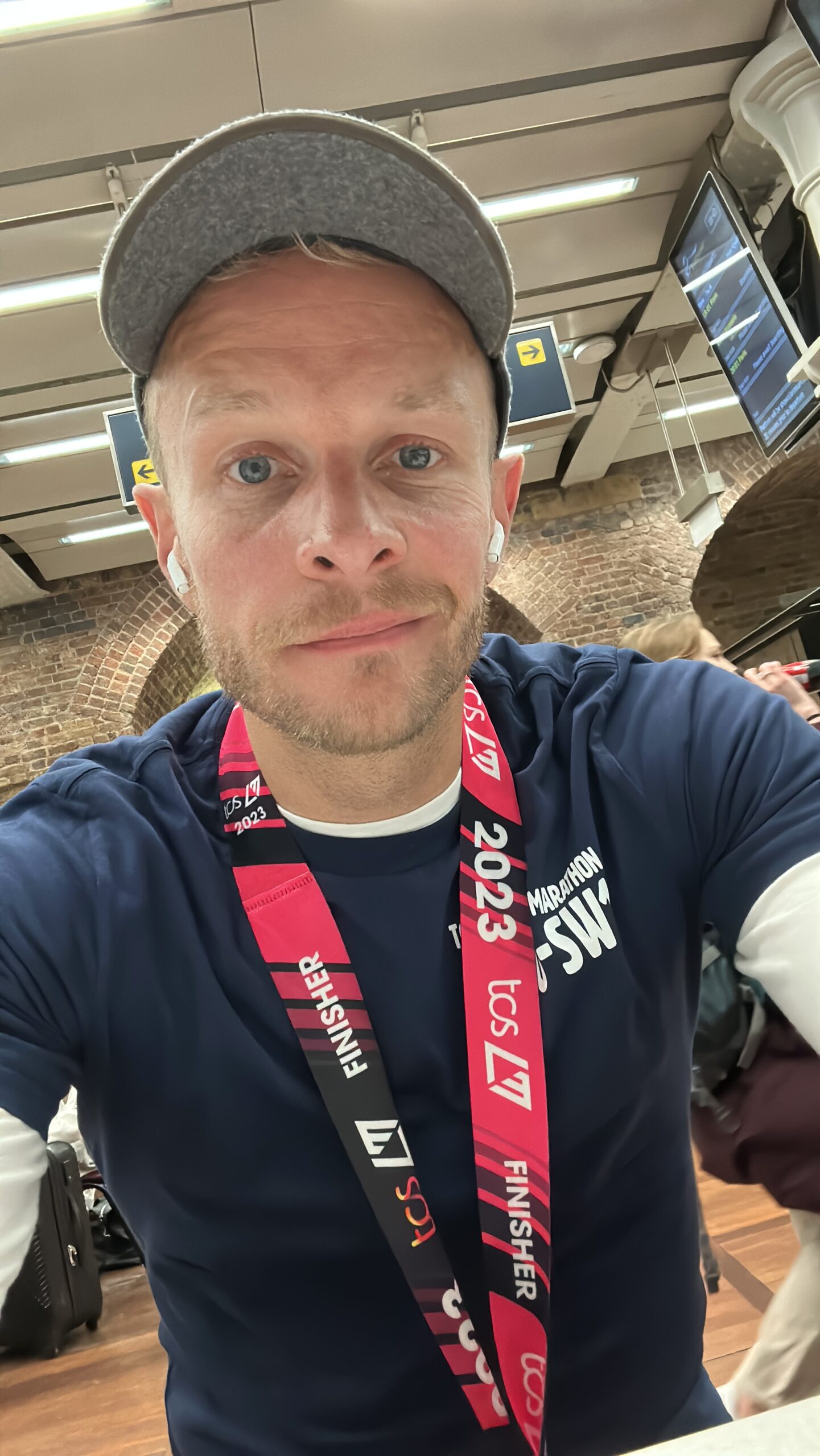
In the sixteen weeks leading up to the London Marathon, I ran roughly 42 kilometres a week. I hadn’t really thought about it in those terms while I was training; there were long runs, short runs, recovery runs, faster runs and plenty of runs that didn’t particularly resemble whatever was written in the training plan. But when I eventually added up the distance, there it was. Before I’d even reached the start line in London, I’d effectively run another sixteen marathons getting ready for it.
My legs were understandably looking forward to the whole thing being over. My head, however, was having quite a different experience.
There is an awful lot of time to think when you’re running. A lot. Particularly once the novelty of the playlist has worn off, you’ve exhausted whatever podcasts seemed interesting that morning and you realise there are still twelve kilometres between you and the shower. I started the sixteen weeks thinking predominantly about the physical challenge — whether my legs could do it, whether I’d remain injury-free, whether I could build the distance — but somewhere amongst all those kilometres I became increasingly interested in what was happening in my head.
Running was doing something to my relationship with effort.
And this was slightly inconvenient because I have spent quite a lot of my life believing that more effort is generally the answer.
If something isn’t working, work harder. If you’re not there yet, keep going. If there is a mountain in front of you, find a way over it. There is nothing particularly unusual about that way of thinking and, to be fair, it has served me pretty well. I’ve built things, changed careers, moved countries and generally found that persistence gets you quite a long way.
It turns out that actually running a very long way taught me something slightly different.
The finish line can be really unhelpful
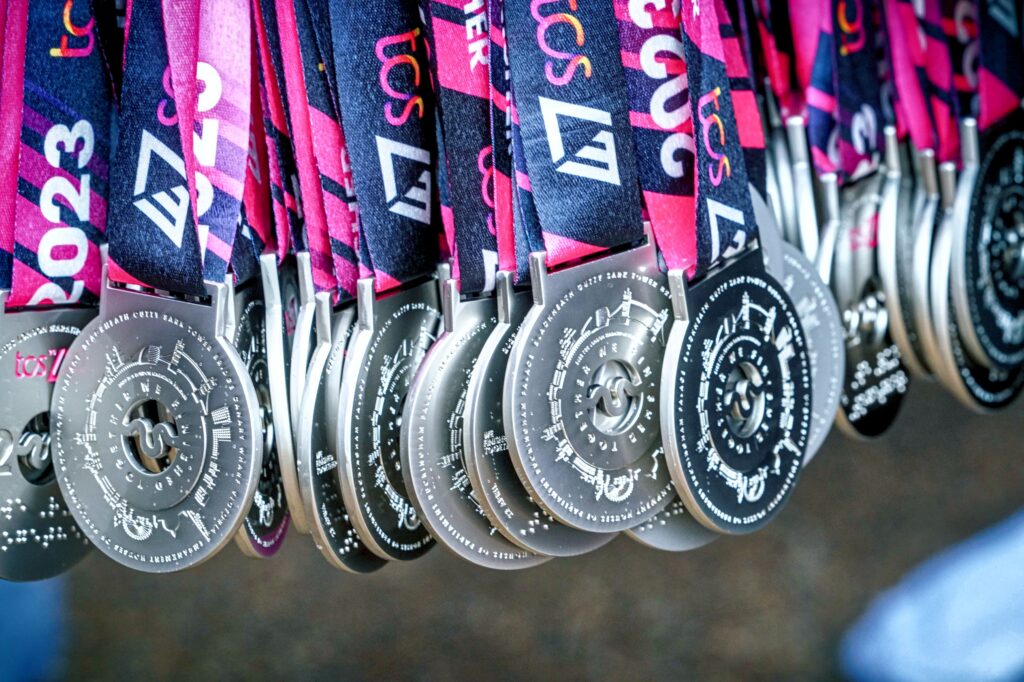
There is something wonderfully uncomplicated about the goal of a marathon. You start here. You finish 42.195 kilometres over there. Nobody needs to spend the first twenty minutes asking what success would look like, and there is very little ambiguity about whether you’ve arrived. Someone has even gone to the trouble of painting a line on the road.
During training, I found that knowing where I was going helped enormously. Some of my hardest runs were in unfamiliar places, not necessarily because the terrain was more difficult but because I couldn’t locate myself within the journey. Around Brussels, I knew what was coming: through the park, past that road, around the corner, along the canal and eventually home. Even when there was still a considerable distance ahead of me, I understood where I was in relation to the end.
On an unfamiliar route, twenty kilometres could feel considerably further.
So yes, having a destination matters. I spend much of my professional life working with people around goals, direction, change and what they want to create, and I’m certainly not about to announce that none of that matters because I went for a run.
But somewhere around kilometre twenty-five, knowing that there are another seventeen kilometres between you and the finish line can become remarkably unhelpful.
Nothing has changed. The finish line is still there and you’re still committed to reaching it, but seventeen kilometres is suddenly a very large thing to carry around in your head. I found myself making the world smaller instead. Get to that tree. Now the junction. Another kilometre. Sometimes, quite literally, just keep putting one foot in front of the other.
That interested me because I’d always thought of having a clear destination and concentrating on the present as complementary ideas, but running made the relationship between them much more tangible. Sometimes the destination gives us direction; sometimes it needs to disappear from view for a while because paying too much attention to how far there is still to go stops us attending to the few metres immediately in front of us.
You don’t have to abandon the destination to stop looking at it for a while.
And then somebody overtakes you
A lot of my training happened around Parc du Cinquantenaire in Brussels. I’d arrive there sometimes with twenty or more kilometres already in my legs, moving at whatever pace my body and I had negotiated that particular day, and somebody would sail past me looking offensively fresh.
Within seconds, my brain could construct an entire story. They’re faster than me. I’m going slowly. I should be doing better.
The minor inconvenience in this otherwise compelling analysis was that I knew absolutely nothing about them. They might have been running five hundred metres. They might have been doing intervals, training for an ultramarathon or starting Couch to 5K. They might simply have realised they were about to miss the tram.
Apparently none of this information was required. Seven seconds of watching somebody else’s run was quite sufficient evidence to make a judgement about mine.
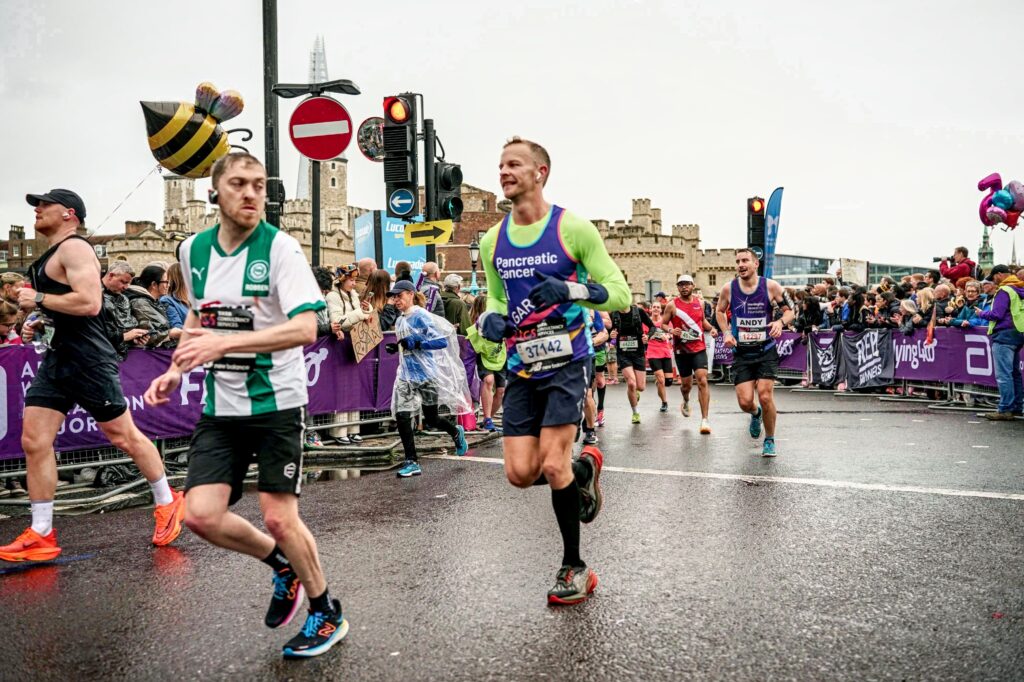
The absurdity becomes obvious when you’re twenty kilometres into a run, but I recognise exactly the same tendency elsewhere. We do it with careers, businesses, relationships, leadership, money, confidence and, God help us, LinkedIn. We take whatever tiny fragment of somebody else’s experience happens to be visible to us and compare it with everything we know about our own.
It’s an extraordinarily unfair competition.
And one we can still somehow manage to lose.
What I gradually became better at doing on those training runs was noticing the comparison without necessarily needing to do anything about it. Somebody could be faster than me. I didn’t need to speed up. Their run wasn’t mine and mine wasn’t theirs, however much my slightly competitive brain might occasionally have preferred otherwise.
I’d love to say I mastered this completely.
I did not.
There will always be niggles
Runners have a wonderfully reassuring word for things that hurt: niggles. Not an injury — absolutely not — just a niggle. Something aches, something pulls, a muscle begins behaving in a slightly funky manner and suddenly you’re conducting a forensic investigation into a sensation you probably wouldn’t even have noticed six months earlier.
Over sixteen weeks there were plenty of them, but what became interesting wasn’t simply the physical sensation. It was how quickly the sensation acquired a story.
My calf feels a bit funny could become perhaps I’ve trained too hard, perhaps I’ve injured myself, perhaps I won’t be able to run this week, perhaps the marathon is now in jeopardy and perhaps sixteen weeks of my life have been wasted with astonishing efficiency.
That’s quite a journey for one slightly grumpy calf.
Sometimes pain is important information and obviously I’m not suggesting that the answer is to ignore your body and run yourself into an injury. What interested me was the space between the information I actually had and everything I subsequently decided that information meant.
We do this rather well as humans. Something happens and then, almost immediately, we explain it to ourselves. The explanation can become considerably heavier than the thing we started with.
Persistence and force are not the same thing
This was probably the biggest learning for me, and also the most irritating.
Some days I could run. Other days I really couldn’t.
There were mornings when the first five kilometres felt harder than twenty had the previous week. Sometimes I was tired because I’d overloaded my diary, sometimes something hurt, sometimes my legs simply weren’t interested in the training plan I’d created for them and occasionally there appeared to be no reason whatsoever.
My instinct was usually to push harder.
I know that response rather well outside running too. When something matters, I put more into it. I work harder, think harder, stay later, find another way. There is something in me that associates effort with commitment: if I’m prepared to keep pushing, I must really want it.
Running complicated that assumption because fighting yourself for thirty kilometres is exhausting and, more importantly, doesn’t necessarily make you run any better.
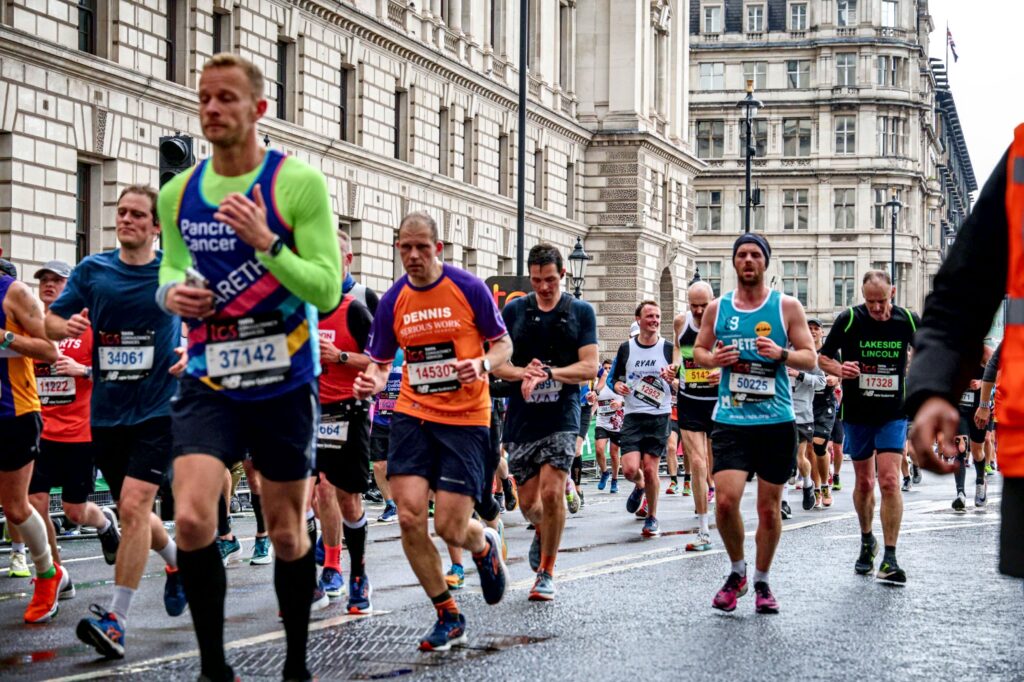
Over those sixteen weeks I started noticing a distinction between persistence and force. Persistence got my shoes on when it was cold, wet or I simply couldn’t be bothered. Persistence kept me following the training over months rather than days and eventually got me onto the start line in London. Persistence mattered enormously.
Force was different. Force was my insistence that today’s run needed to look like last week’s; that slowing down meant something had gone wrong; that because the training plan said I should be able to do something, my body was somehow obliged to agree.
I’ve always liked the image of a river cutting through a mountain. There is enormous power in it, but very little of that power looks like a fight. The water changes direction, finds the available space and keeps moving. I used to hear expressions such as going with the flow as somehow implying less ambition, less commitment or giving up when something became difficult. Running gave me a rather different appreciation of it.
You can remain completely committed to where you’re going without insisting on exactly how you must get there.
So, did running make me stronger?
Physically, yes. Obviously.
But I’m not sure stronger is what I find most interesting about those sixteen weeks. I think running made me a little more suspicious of my assumption that progress should always feel like pushing. It showed me that the finish line could motivate me and overwhelm me, that somebody overtaking me told me almost nothing about how well I was running, and that what I was experiencing in any given moment wasn’t necessarily the same as the story I was creating about it.
Most importantly, it made me notice how often I had treated effort as though it only had one setting.
I haven’t become some beautifully enlightened runner as a result. I still swear at hills. I still occasionally speed up when somebody overtakes me despite knowing perfectly well how ridiculous that is, and there are still days when slowing down feels like something I need to justify. Apparently awareness isn’t the same thing as transcendence.
But somewhere across those sixteen marathons before the marathon, the question changed for me. It became less about how hard am I prepared to work to get where I’m going? and more about what kind of effort does this particular moment actually require?
Sometimes the answer is to push. Sometimes it is to keep going quietly. Sometimes it is to change direction, slow down or pay attention to what is happening rather than what the plan says should be happening.
And sometimes, perhaps, getting where you’re going requires you to stop pushing quite so bloody hard.
