Most coaching conversations happen in fairly predictable places. Two chairs in a room. Two rectangles on a screen. Perhaps a coffee somewhere if we’re feeling adventurous.
There is nothing wrong with any of those. I work online regularly and some extraordinarily rich conversations can happen when two people are sitting on opposite sides of a screen. But occasionally changing the environment changes something in the conversation too.
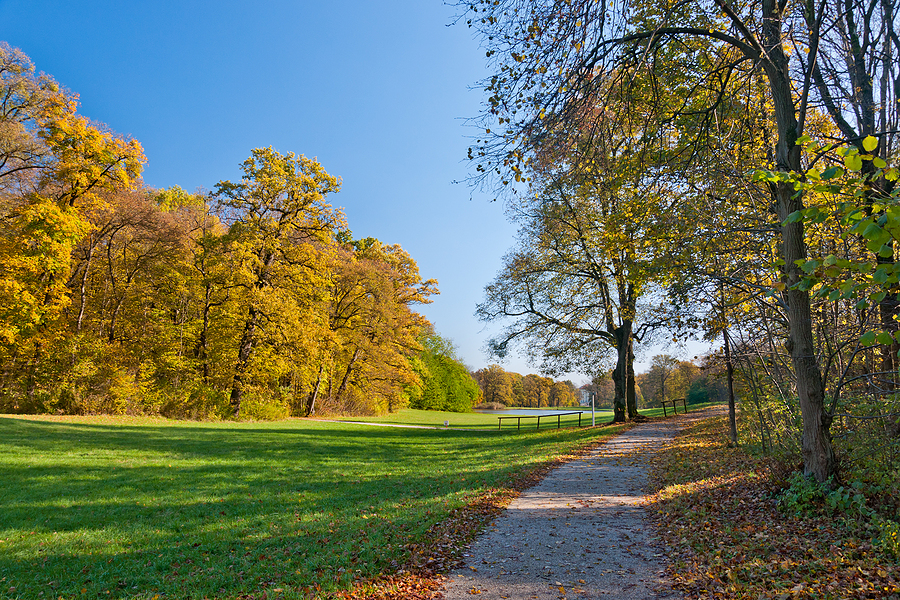
I was reminded of this while coaching a client in one of Brussels’ parks. Rather than sitting opposite one another, we walked.
We hadn’t planned a route. There was no agreed destination and neither of us decided beforehand which paths we would take. We simply started walking and allowed the conversation — and, to some extent, the park — to determine where we went.
At various points we changed direction. Sometimes we stopped. Sometimes we walked more quickly and sometimes considerably more slowly. There were moments when the conversation seemed to disappear for a while and the walking took over, before something else emerged and we carried on.
It was only afterwards that I noticed how closely the physical journey had begun to resemble the coaching itself.
Who needs to know where we’re going?
My client had another appointment after our session and needed to be somewhere specific at a particular time. I knew that, and I was aware of the time as we walked. She never once looked at her watch.
There was something about that which stayed with me.
She trusted me to hold one part of the boundary around our conversation — the time — while she attended to what she needed from the conversation itself. At the same time, I wasn’t deciding where we needed to go, literally or metaphorically. I wasn’t hurrying her towards a destination simply because I knew our fifty minutes would eventually end.
There was trust moving in both directions, but responsibility wasn’t confused.
Perhaps that is one of the more interesting tensions in coaching. I have responsibilities as a coach. I hold time, boundaries, ethics and our agreement about the work we’re doing together. But holding those things doesn’t mean I need to know where the client should end up.
I can hold the space without determining the destination.
That sounds rather obvious when I write it down. In practice, I think it can be remarkably difficult.
Walking changes the conversation
There is something different about talking when you’re not looking directly at another person.
Silences feel different when you’re walking. Nobody has to rescue them quite so quickly because you’re still doing something together. Your attention can move between the conversation and whatever happens to be around you. You notice something, walk past it, turn a corner and perhaps find yourself saying something you hadn’t intended to say.
And movement gives the conversation a rhythm of its own.
I don’t think that makes walking inherently better than sitting in a room or meeting online. Some conversations need stillness. Some benefit from the intimacy of being opposite another person. Some clients would find walking distracting, uncomfortable or simply irritating.
But changing the environment can change what becomes available to us.
And that makes me curious.
Perhaps we don’t always need the route
There is a temptation in coaching to become rather preoccupied with destinations. What is the goal? What would you like to achieve? Where do you want to be by the end of the session?
Those can be useful questions.
But sometimes we don’t know yet.
On that particular morning, neither of us knew exactly which paths we would take through the park. That didn’t prevent us from beginning the walk. We could choose one direction, notice where it led and decide what to do when the next path appeared.
Coaching can be a little like that.
There are times when the destination is wonderfully clear and our work is partly about finding a way towards it. And there are other times when deciding the destination too quickly might actually prevent us from noticing somewhere more interesting.
Perhaps we don’t always need to know where we’re going. We need enough trust to start walking and enough attention to notice where we are.
After fifty minutes, we arrived exactly where my client needed to be for her next appointment.
I’m not going to pretend the universe had somehow guided us there. I knew where we were.
But she hadn’t needed to.
And perhaps that was the part of the walk that stayed with me.
