Fear of rejection and I go back a long way.
Years ago, I worked in direct sales for a tailoring company. On paper, there was an enormous amount to like about the job: a great boss, considerable freedom, interesting clients and a lifestyle that suited me rather well. There was just one rather significant problem. I had to pick up the telephone and ask people if they wanted to meet me.
Some days, the possibility that the person on the other end might simply say no felt enormous. Not disastrous. Not life-changing. Just no. And yet I could lie in bed in the morning thinking about those calls and feel completely overwhelmed by them.
People tried to help. It’s a numbers game. What’s the worst that can happen? There’s nothing to fear but fear itself. All offered with the best intentions and, unfortunately, none particularly useful to me at the time.
So I did what I thought I was supposed to do. I pushed harder.
And the harder I pushed against what I was feeling, the harder everything seemed to become.
Eventually I left the job. Looking back, I can see that I was struggling with considerably more than a reluctance to make sales calls, and I wouldn’t now try to wrap that period of my life into a convenient story about confidence or positive thinking. Life tends to resist being made quite that tidy.
But there is something from that experience that has stayed with me.
I was waiting to stop being afraid
I think I had assumed there would eventually be a point at which I became sufficiently confident that rejection would no longer bother me. Perhaps I would develop a thicker skin, discover the right technique or somehow become the sort of person who could hear no fifty times before lunch and merrily carry on dialling.
That person never arrived.
What I did notice, though, were occasional days when the fear was still somewhere in the room but wasn’t running the meeting. I made a call. Then another. Someone said no and I made another one anyway. Occasionally somebody said yes.
The difference wasn’t that I had finally conquered fear. I had simply stopped requiring fear to disappear before I did anything.
I think that’s an important distinction.
We can spend an extraordinary amount of energy trying to get ourselves into the right state before acting. I’ll have the difficult conversation when I feel more confident. I’ll apply when I’m sure I’m ready. I’ll challenge the decision when I know exactly what I want to say. I’ll speak in the meeting when I stop worrying about what everybody else might think.
The problem, of course, is that confidence doesn’t always arrive first.
Sometimes it turns up afterwards.
My dogs understand tension rather better than I do
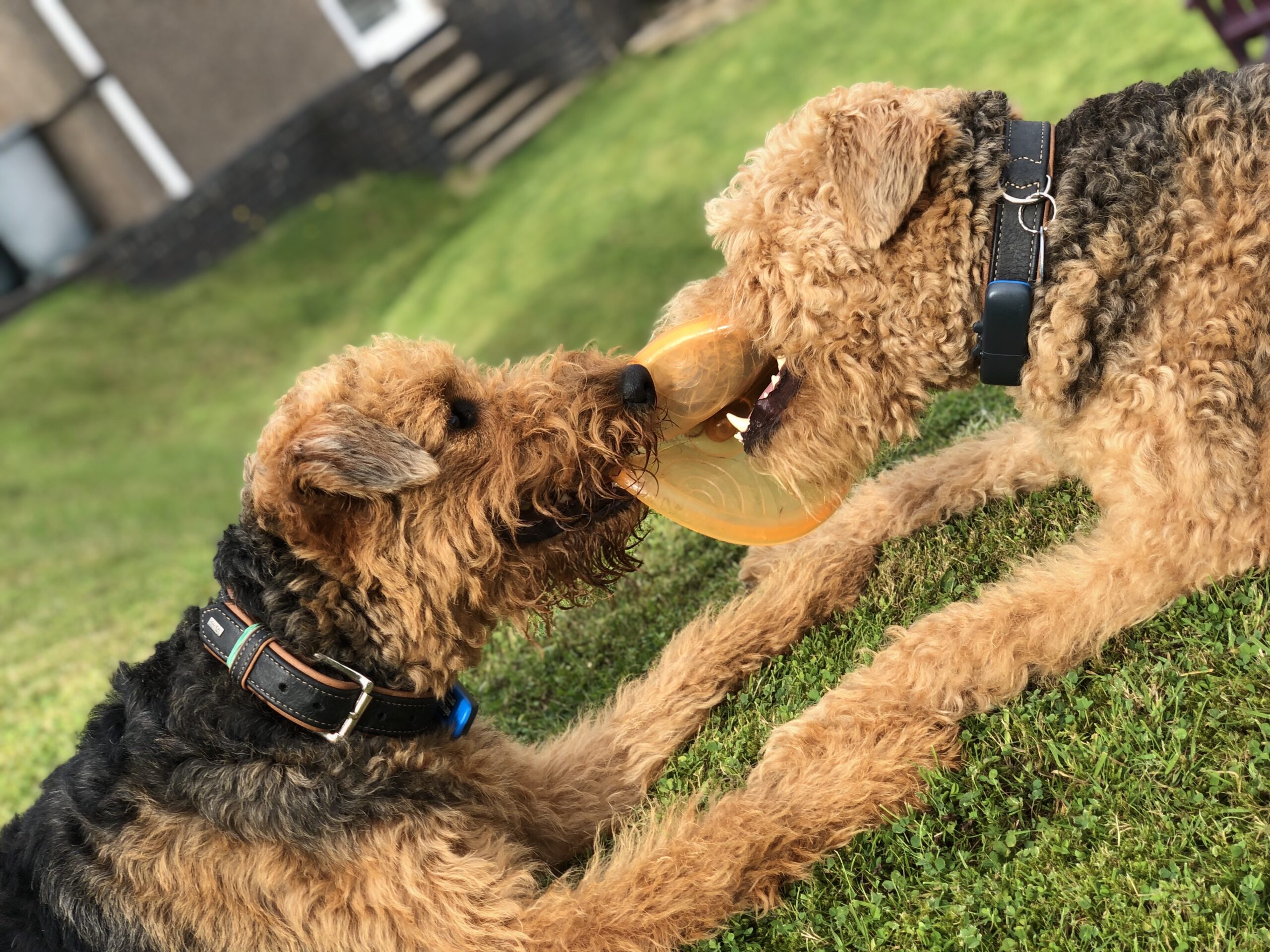
Anyone who has lived with dogs will recognise the particular intensity of a game of tug. Two animals, one rope, four firmly planted paws and an apparently unshakeable conviction on both sides that victory depends upon pulling harder than the other one.
And then one dog lets go.
The entire game changes instantly.
I don’t think human fear works quite as conveniently as a rope — unfortunately, dropping it on the floor and wandering off isn’t generally an option — but there is something in that image that interests me.
What happens when we stop pulling quite so hard against what we’re feeling?
Not because the feeling is irrational. Not because we should replace it with a positive one. And certainly not because fear is secretly a wonderful gift that we ought to be grateful for.
Simply because it is already there.
Perhaps the question changes from How do I get rid of this? to What becomes possible while this is here?
That is a very different conversation.
Rejection still means something
I don’t particularly like the idea that we should become indifferent to rejection. If something matters to us, being told no can hurt. The job we wanted, the proposal we believed in, the promotion we’d worked towards, the person whose approval mattered more than perhaps we realised.
Pretending not to care doesn’t strike me as particularly useful.
But neither does allowing the possibility of rejection to make every decision on our behalf.
There is a space somewhere between those two positions. A place where we can acknowledge that yes, I really want thisand yes, I might not get it without needing either statement to disappear.
And perhaps that is where agency becomes interesting. Not having complete control over what happens to us, or even complete control over how we feel about it, but having some choice about what we do next.
Courage might not be the absence of fear. It might simply be discovering that fear doesn’t get the only vote.
I wish I’d understood that when I was staring at the telephone all those years ago.
Although, knowing me, somebody probably tried to tell me.
I just wasn’t ready to hear it yet.
